
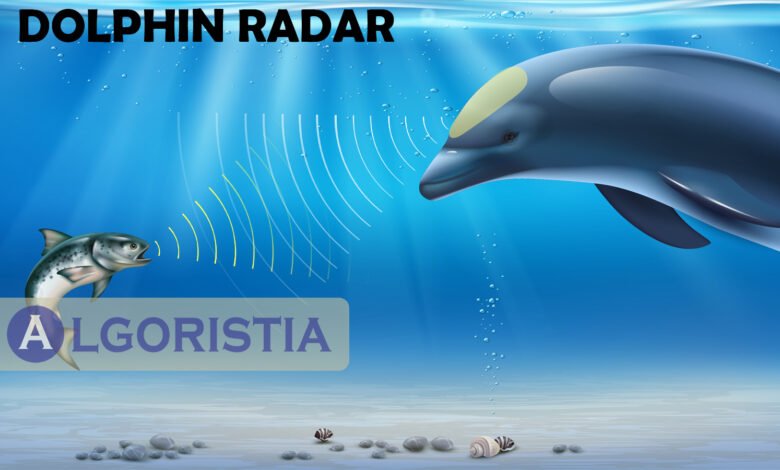
Dolphin radar is a term that covers two connected ideas: the natural sonar system dolphins use to “see” underwater, and the modern radar technology that scientists built by copying it. Both versions solve the same problem in different worlds. Dolphins use sound to hunt, avoid danger, and talk to each other in dark or murky water. Engineers later studied this system and used it to build detection tools that work better than older radar designs. This guide explains both sides of dolphin radar in simple terms, so you can understand how it works, where it came from, and why it still matters today.
What Is Dolphin Radar?
The phrase “dolphin radar” most often points to echolocation, the natural sonar system that dolphins use to move and hunt in the ocean. Dolphins send out clicking sounds and listen for the echoes that bounce back off nearby objects. This lets them build a sound picture of their surroundings, even in total darkness.
The same phrase also describes a man-made radar system inspired by this ability. Researchers noticed that dolphins can find small fish hidden behind walls of bubbles, something that confuses standard sonar and radar completely. This skill led scientists to design new detection systems based on the same signal pattern dolphins use.
So dolphin radar is not one single device. It is both a biological system and a family of technologies inspired by it. Knowing this difference helps make sense of the many uses you will read about in this article.
How Dolphin Echolocation Works
Dolphin echolocation starts inside the animal’s nasal passages, where it produces rapid clicking sounds. These clicks travel through the melon, a rounded, fatty organ on the dolphin’s forehead that focuses sound waves like a lens. Once released, the sound moves outward through the water in a narrow beam.
When the sound waves hit something, such as a fish, a rock, or a boat hull, they bounce back toward the dolphin. The returning echoes travel through the dolphin’s lower jaw, which is filled with fatty tissue that carries sound to the inner ear. From there, the dolphin’s brain processes the echoes almost instantly.
This process gives dolphins incredibly detailed information. They can judge an object’s size, shape, speed, and even texture from the sound alone. Because sound travels faster and farther underwater than light, echolocation gives dolphins a clear advantage over relying on sight in dark or cloudy water.
Dolphins adjust their clicks depending on the task at hand. They use shorter, closer-spaced clicks when they are near an object, allowing for faster updates similar to a camera taking rapid photos as it zooms in on a target.
Twin Inverted Pulse Radar: The Technology Inspired by Dolphins
One of the clearest real-world examples of dolphin radar technology is Twin Inverted Pulse Radar, known as TWIPR. It was developed by Professor Tim Leighton and his team at the University of Southampton, working alongside University College London and Cobham Technical Services.
Traditional radar sends out a single pulse and listens for the reflection. TWIPR works differently. It sends out two pulses in quick succession, and the second pulse is a mirror image of the first. When these two signals bounce off a simple object, like a rock or a piece of clutter, their echoes cancel each other out. When they bounce off a more complex object, like a hidden weapon or a genuine threat, the echoes do not cancel out in the same way.
This method solves a problem that has troubled radar and sonar designers for years: telling the difference between real threats and harmless background clutter. Dolphins seem to manage this naturally when hunting fish inside bubble clouds, and TWIPR borrows that same signal logic to cut through confusing underwater or airborne noise.
Because of this ability, TWIPR has drawn interest from security and defense researchers looking for better ways to detect hidden objects without a high rate of false alarms.
Dolphin Radar for Protecting Marine Life
Radar and sonar technology also play a direct role in protecting real dolphins, not just imitating them. Ships pose a serious risk to dolphins and other marine mammals through collisions, so researchers have built detection systems that track dolphins near busy shipping lanes.
One example is a passive acoustic monitoring system tested near the Portofino Marine Protected Area in Italy. This system uses underwater microphones, called hydrophones, to listen for dolphin whistles and boat engine sounds at the same time. It can calculate the real-time position of both dolphins and vessels, then send warning alerts to boaters to help prevent collisions.
Radar has also been tested directly from ships to track marine mammals from the surface. A study using ship-based radar successfully tracked pods of dolphins and whales from several kilometers away, even identifying different species based on their movement patterns. In one case, researchers tracked a pod of fin whales continuously for more than three hours.
Beyond navigation, radar technology has even reached veterinary care. Researchers at the Space and Naval Warfare Systems Center and Lawrence Livermore National Laboratory built a tool called Micropower Impulse Radar, which uses extremely low-power microwave pulses to monitor a dolphin’s heartbeat and breathing without touching the animal. This gives veterinarians a safe way to check the health of dolphins that cannot undergo standard medical procedures.
Why Dolphin Radar Matters Today
Dolphin radar matters because it connects two important goals: better technology and better protection for marine life. The biomimetic design behind systems like TWIPR shows how studying nature can lead to real engineering breakthroughs, not just in ocean settings but in security, search and rescue, and medical monitoring as well.
At the same time, radar-based tracking tools give scientists and coastal authorities a practical way to reduce harm to dolphin populations. Ship strikes remain a leading cause of injury and death for marine mammals, so early detection systems can make a real difference in busy coastal waters.
These tools also support long-term research. Continuous tracking data helps scientists understand dolphin behavior, movement patterns, and population health over time. This information supports conservation policies and helps protect species that are already facing pressure from noise pollution, fishing gear, and habitat loss.
Limitations and Challenges
Dolphin radar technology is impressive, but it is not perfect. Radar and passive acoustic systems can struggle in rough sea conditions, since waves and weather noise can interfere with accurate detection. Detection range also drops in poor conditions, which limits how early a warning system can alert nearby boats.
Cost is another factor. Advanced systems like TWIPR or ship-based tracking radar require specialized equipment and trained operators, which can make widespread use difficult for smaller organizations or developing coastal regions.
There are also biological limits to consider. Echolocation itself can be disrupted by human-made ocean noise, including heavy boat traffic and certain sonar tests. This means that while radar technology can help protect dolphins from collisions, other forms of underwater noise can still interfere with the natural echolocation dolphins depend on every day.
Conclusion
Dolphin radar tells two connected stories. One is about a remarkable natural ability that lets dolphins navigate and hunt using sound alone. The other is about engineers turning that same idea into real detection tools that protect marine life and improve safety on the water. Together, they show how nature and technology can work side by side to solve problems neither could solve as well alone.
Frequently Asked Questions
Is dolphin radar the same as sonar?
Dolphin radar and sonar are closely related but not identical. Sonar uses sound waves underwater, which is exactly how dolphin echolocation works. Some man-made “dolphin radar” systems use radio waves instead, following the same signal pattern that dolphins use with sound.
How far can dolphins detect objects with echolocation?
The exact range depends on water conditions and the size of the object, but dolphins can detect prey and obstacles from many meters away, often well before the object is visible to the human eye in clear water.
What is TWIPR used for?
Twin Inverted Pulse Radar is mainly used in security and detection research. It helps separate real targets from harmless clutter, which makes it useful for finding hidden objects with fewer false alarms.
Can radar really help prevent dolphin and ship collisions?
Yes. Passive acoustic monitoring systems can track both dolphin positions and boat movement in real time, allowing warning alerts to be sent to vessels before a collision happens.
Why do scientists study dolphin echolocation for technology?
Dolphins can detect prey hidden in confusing conditions, such as clouds of bubbles, better than many existing detection systems. Studying this ability has helped engineers design radar systems that filter out background noise more effectively.